Auafarm:
Farm & Travel App
Developed as an MSc Thesis at Politecnico di Milano (Top-10 Design University globally), Auafarm addresses a national crisis in Kazakhstan: the collapse of small-scale farming due to rapid urbanization. The project builds a digital bridge designed to attract the younger generation back to the steppe transforming nomadic heritage into a prestigious, high-tech, and profitable ecosystem.
Mission: “Making Farming Sexy Again.”
Intro
Problem
Small-scale farmers in Kazakhstan lose up to 50% of their revenue to middlemen. Urban youth see farming as an obsolete, “unsexy” profession. Without a digital bridge, the rural sector and centuries of nomadic heritage face an existential threat.
Solution
Auafarm is a “Trust-First” managed marketplace. It introduces a human-mediated layer—the Auafarm Team—to verify farms and build trust. The platform uses a high-contrast, low-literacy-first interface designed for first-time smartphone users in rural areas, giving farmers direct market access and new income through agritourism.
Outcome
MSc with Distinction
Validated by the Politecnico di Milano academic board.
No Middleman Tax
Designed to eliminate the 50% farmers lose today — replacing exploitation with a trust-first managed marketplace.
Heritage-as-a-Service
An original model, replicable across multiple UN SDGs.
Methodology
Navigating Complexity
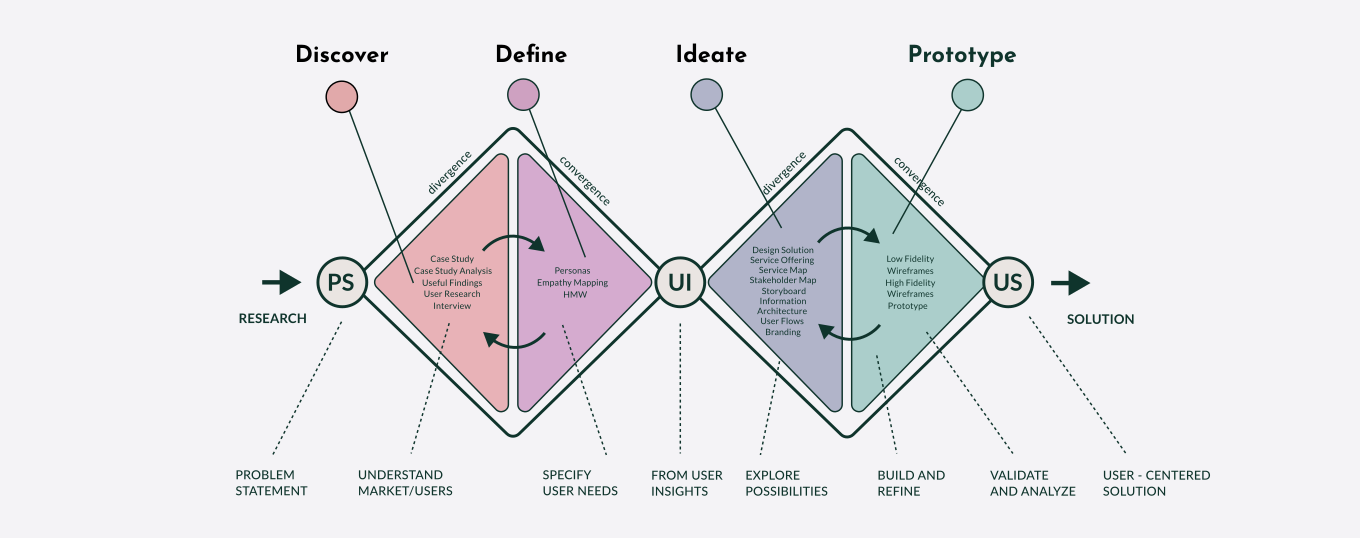
Kazakhstan's rural market has a massive digital divide and deep cultural mistrust. A standard linear process would have been a business risk. I used the Double Diamond to move from an undefined problem space into a validated, farmer-centric infrastructure.
Strategy over Aesthetics
The first diamond focused on Discovery & Trust. The second addressed Scalability & Technical Constraints. Every design decision was rooted in field research not assumption.
Discover
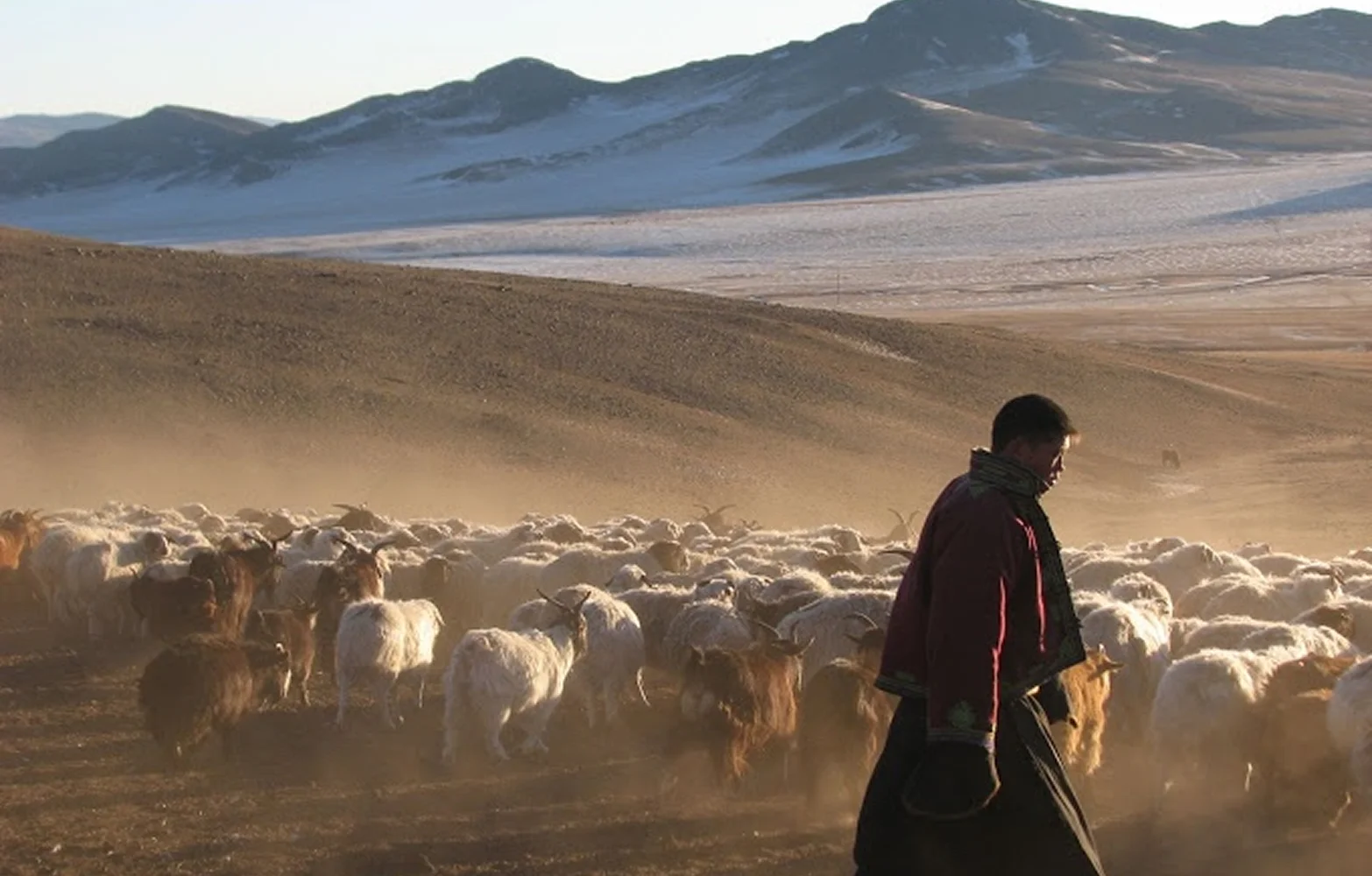
Steppe Ethnography: Shattering Assumptions
Global Benchmarking
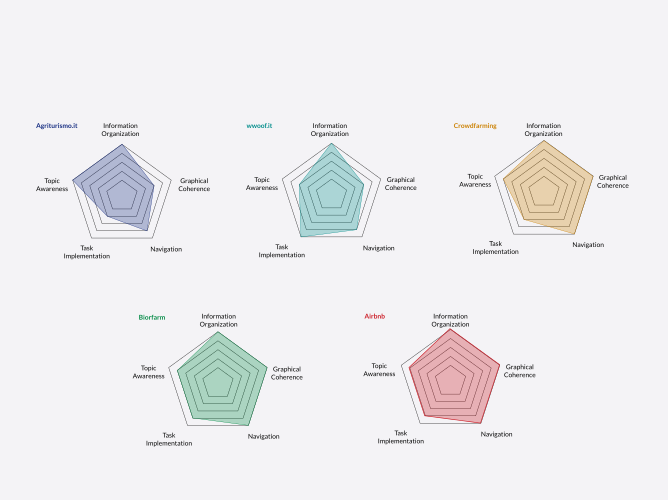
I started by studying what actually works at scale. I analyzed the Italian “Agriturismo” model: how heritage is sold as a premium service. I extracted the logic of “Heritage-as-a-Service” and adapted it to the Kazakh tradition of nomadic hospitality.
The Trust Gap
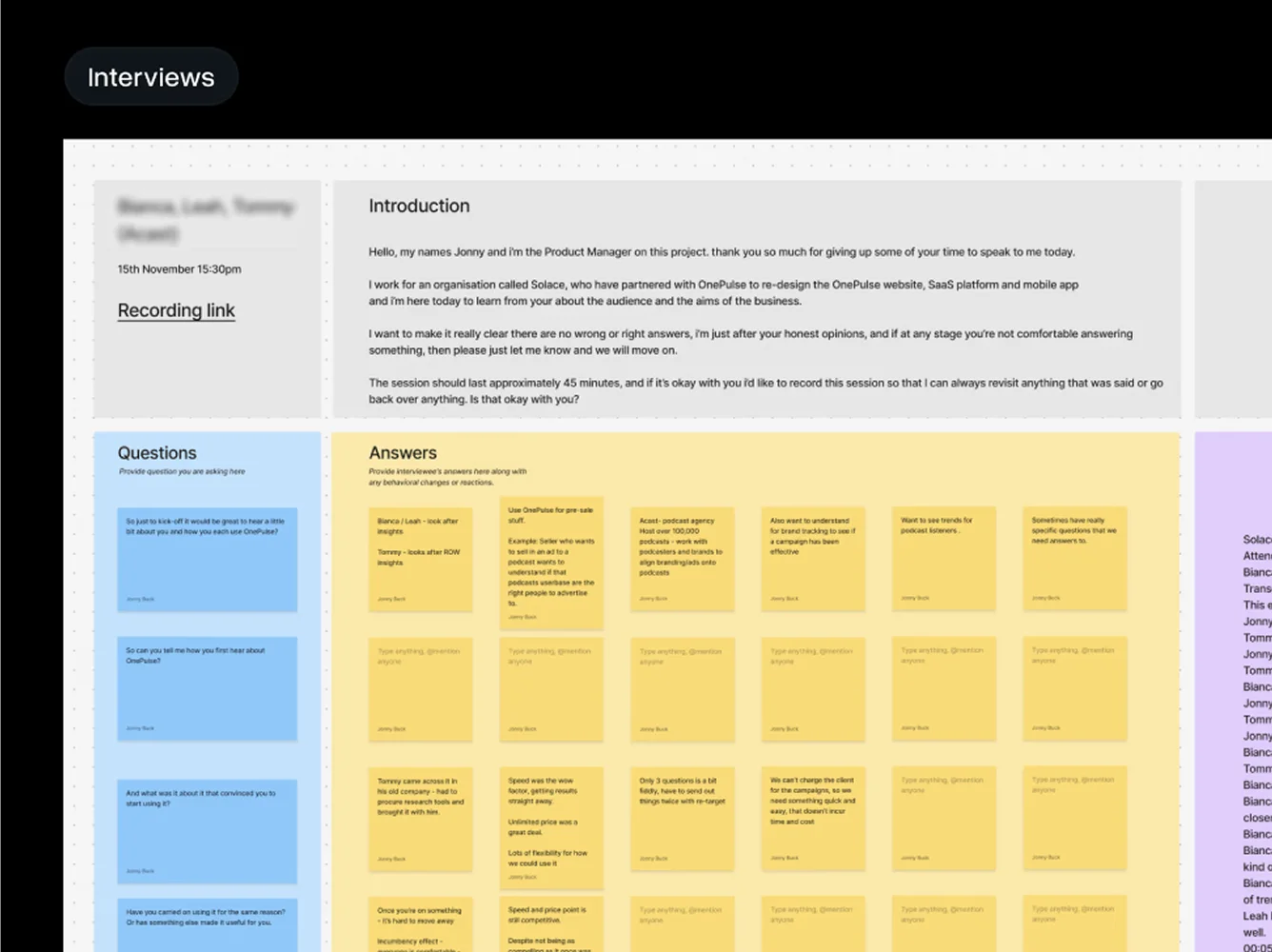
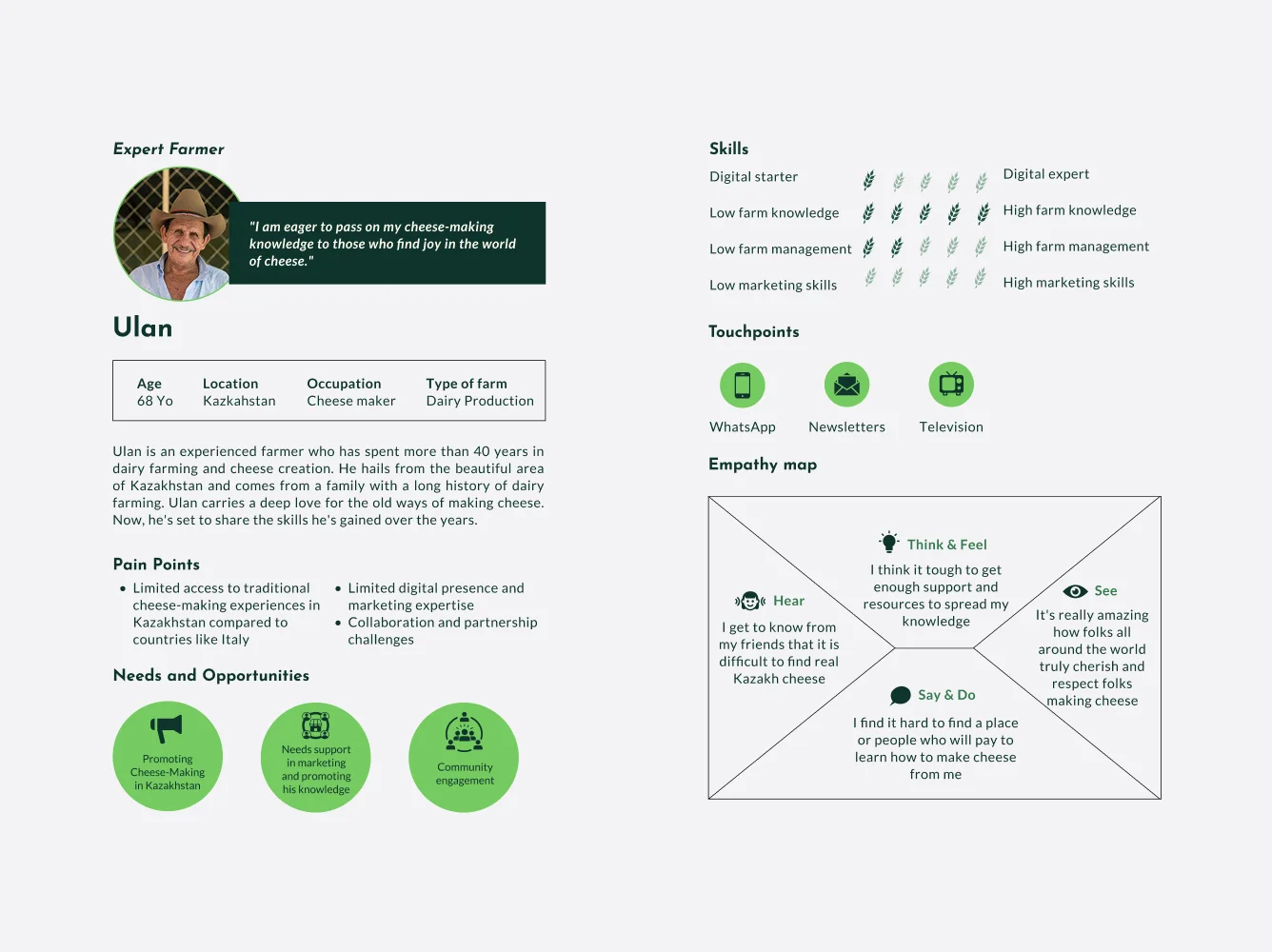
I conducted 3 in-depth ethnographic interviews with rural farmers (Rabiга, Sailaukul) and 1 contextual interview with an urban user (Asema, Gen Z student). One moment defined the entire project. Rabiга told me: “I only deal with people I can see.” Farmers use WhatsApp daily but they have zero trust in invisible digital platforms. They rely on family networks and physical presence to do business.
This wasn't a UX problem. It was a cultural infrastructure problem.
Define
The Strategic Pivot to Managed Marketplace
From Tool to Ecosystem
My initial hypothesis—a simple “Airbnb for farms”—was invalidated by the research. Farmers didn't need a booking tool. They needed a business partner. I validated this pivot through stakeholder mapping and economic viability analysis before moving to prototype.
Architecting the Auafarm Team
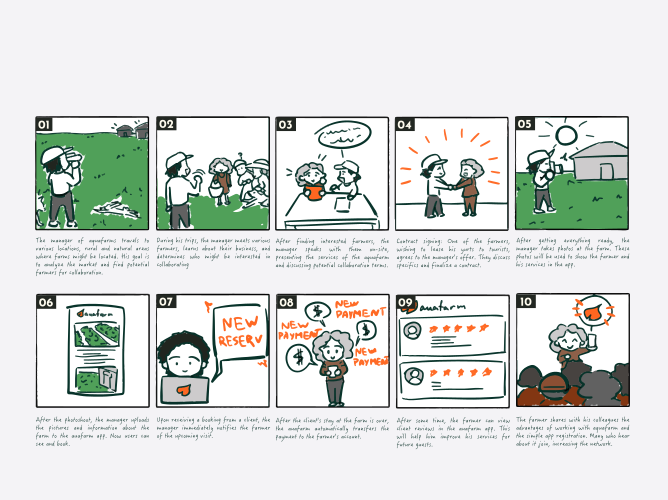
I pivoted to a “Managed Marketplace” model. I introduced the Auafarm Team as the vital human layer—the “glue” that verifies farms on-site and bridges the gap between the remote farm and the city user.
Ideate
Engineering the Service Logic
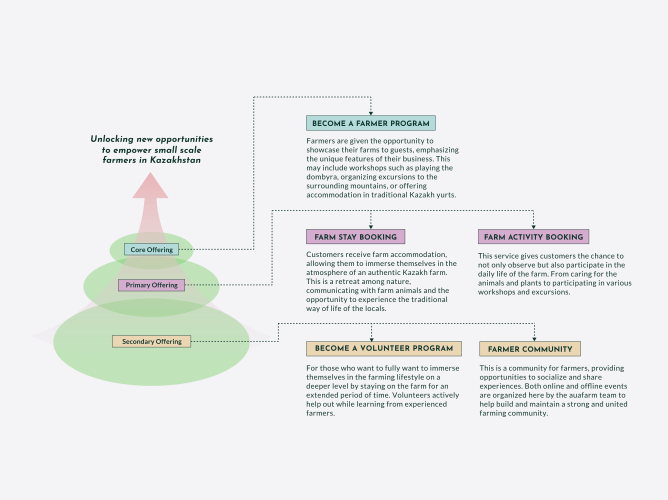
The Offering Hierarchy
I built a dual-tier service model to solve two problems at once.
“Survival” — direct sales of produce, gives farmers a daily economic reason to use the app.
“The Sexy” — agritourism and farm stays, builds the brand and attracts the younger generation. Linking both in one platform ensures the business works from day one.
Stakeholder Viability
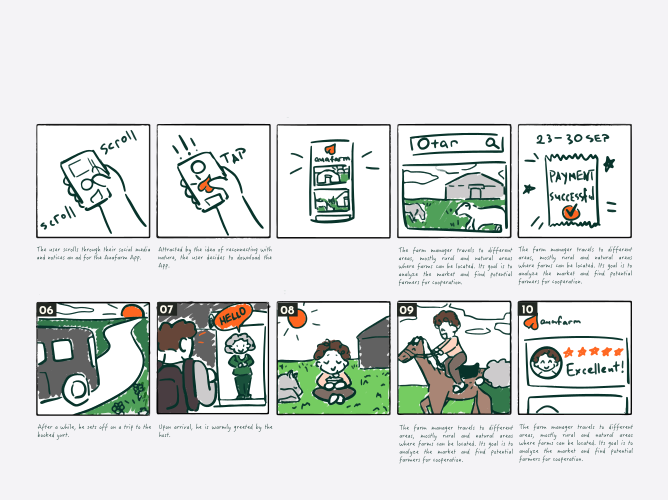
I designed a Stakeholder Map to align government subsidies with private business goals. The revenue model is commission-based: Auafarm takes a service fee per booking, covering team operations. Social impact — self-sustaining, not grant-dependent.
Prototype
Designing for Rural Realities
Built for Low Digital Literacy
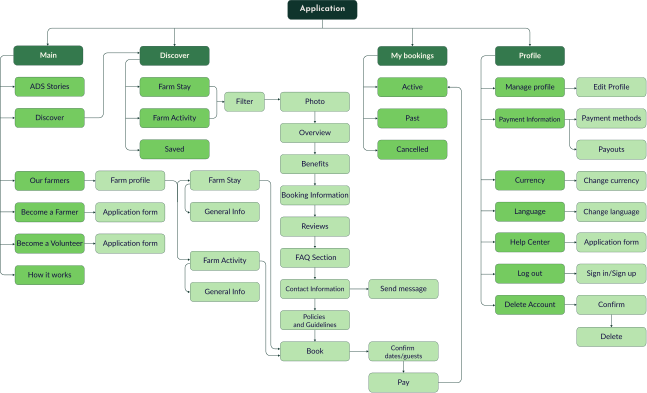
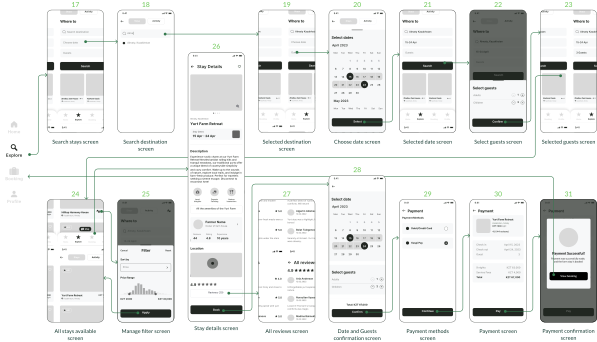
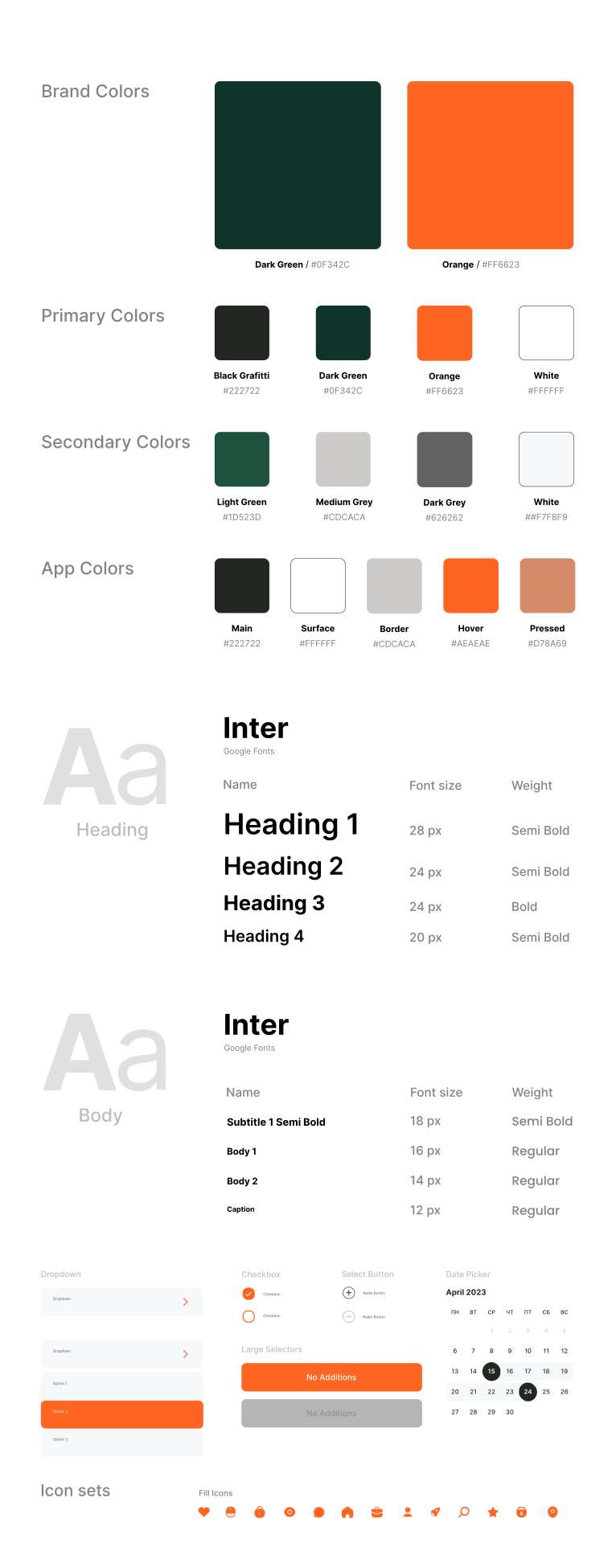
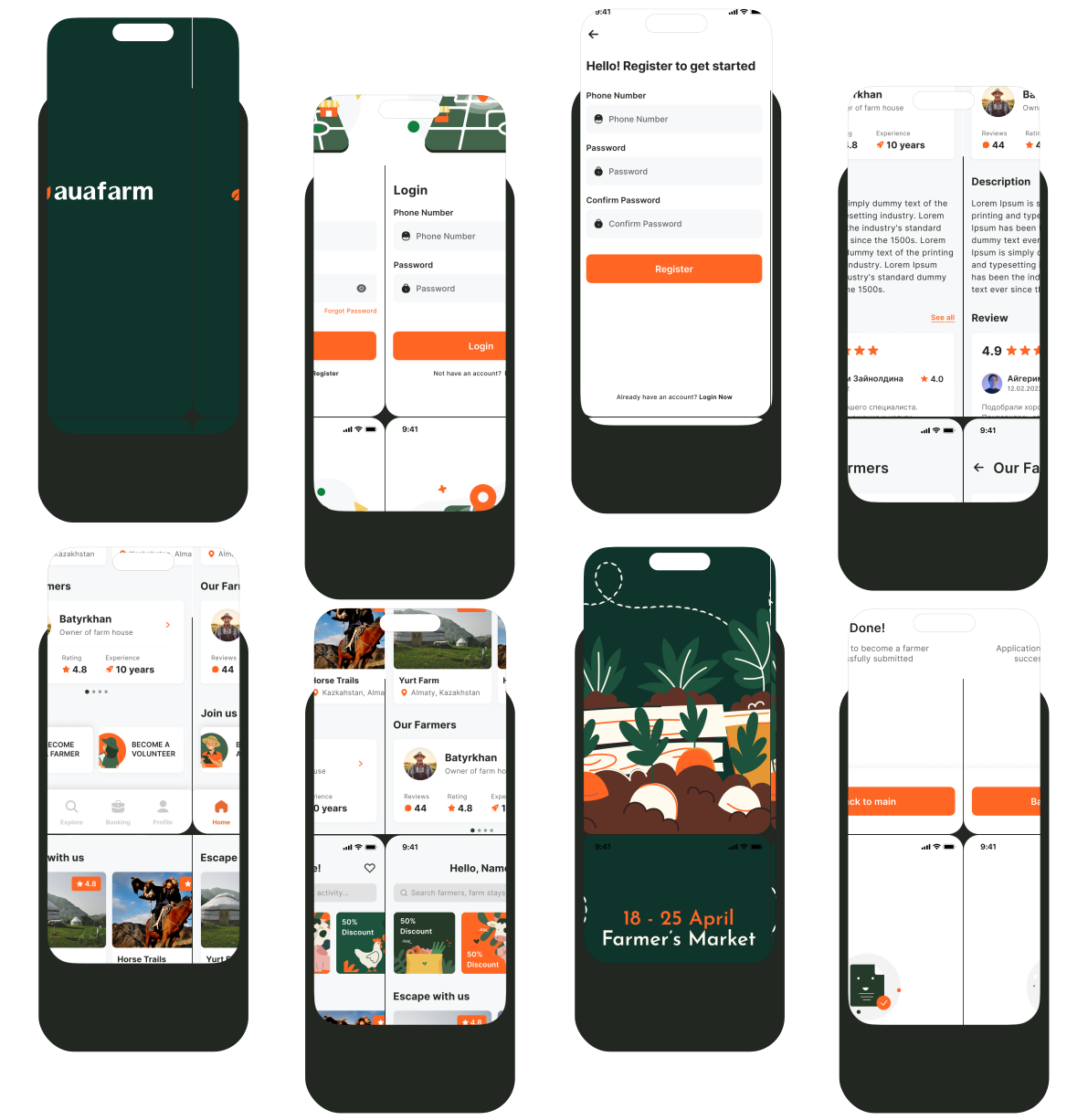
Many rural users are opening a marketplace app for the first time. I designed a high-contrast, simple-first interface — large tap targets, clean card layouts, and no hidden gestures — so every screen is readable and usable without prior app experience.
Strategic Choice: Localized Transaction Model
Kazakhstan has high mobile P2P payment adoption — the Kaspi ecosystem is everywhere. But my research revealed a “Platform Trust Gap.” Farmers are comfortable sending money to a person. They don't trust a third-party platform holding their funds.
The solution
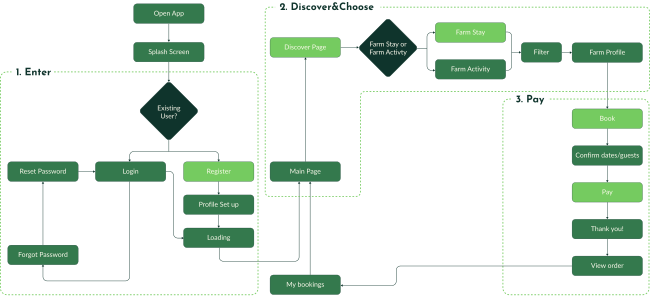
A Hybrid Transaction Flow. The app handles the formal booking and reservation fee. The final settlement happens on-site via QR, P2P transfer, or cash whichever the farmer prefers. This removed the biggest barrier to onboarding: fear of delayed payouts and technical complexity.
Outcome
Defining the Future of Rural Resilience
MSc with Distinction:
Validated by the Politecnico di Milano academic board.
Strategic Success Metrics (Hypotheses)
I defined three core KPIs to measure future viability:
Trust & Activation: % of farmers completing their first sale within 30 days as a proxy for platform trust over WhatsApp.
Economic Resilience: Eliminating the 50% “middleman tax” through direct sales to double farmer net profit.
Community Retention: Frequency of repeat bookings, validating long-term desirability of “Heritage-as-a-Service.”
Project Scope
MSc Thesis, Politecnico di Milano, 2023. Research: 3 farmer interviews (Rabiga, Sailaukul) + 1 urban user (Asema). Prototype not tested at scale. KPIs are strategic hypotheses, not measured outcomes.